Ireland is Europe's only native English-speaking country. Home to the EU headquarters of Google, Apple, Meta and Microsoft — an Irish degree opens doors across the entire European job market. The 2-year Graduate Programme visa lets you stay and build your career after graduation.
Why Ireland
Ireland is the only English-speaking country in the EU — giving your degree access to 27 European economies and beyond.
Ireland is an EU member — your Irish degree and work experience are recognised across all 27 EU countries, opening a continent of career opportunities.
The Third Level Graduate Scheme gives degree and above graduates a 2-year stay-back permission to work anywhere in Ireland without a job offer required.
Google, Apple, Meta, LinkedIn, Salesforce — Dublin's Silicon Docks is the EU base for the world's biggest tech companies. Ireland is the fastest route into European tech.
Spouses and dependent children can join you in Ireland. Your spouse may be eligible for a separate work permission stamp, allowing them to earn during your studies.
Top Cities & Universities
Six of Ireland's most popular destinations for Indian students — each with unique strengths.
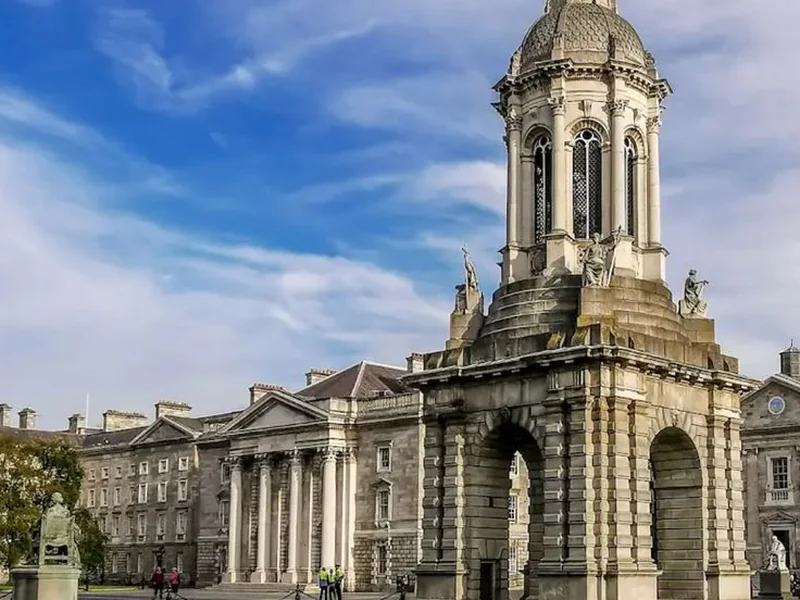
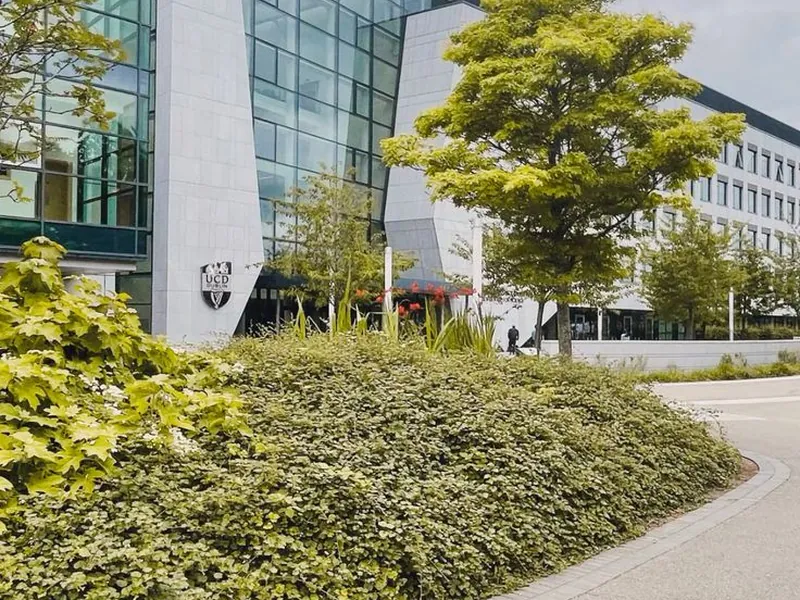
Trinity College Dublin, UCD, DCU — Ireland's capital and tech hub. Home to EU offices of every major global tech company.
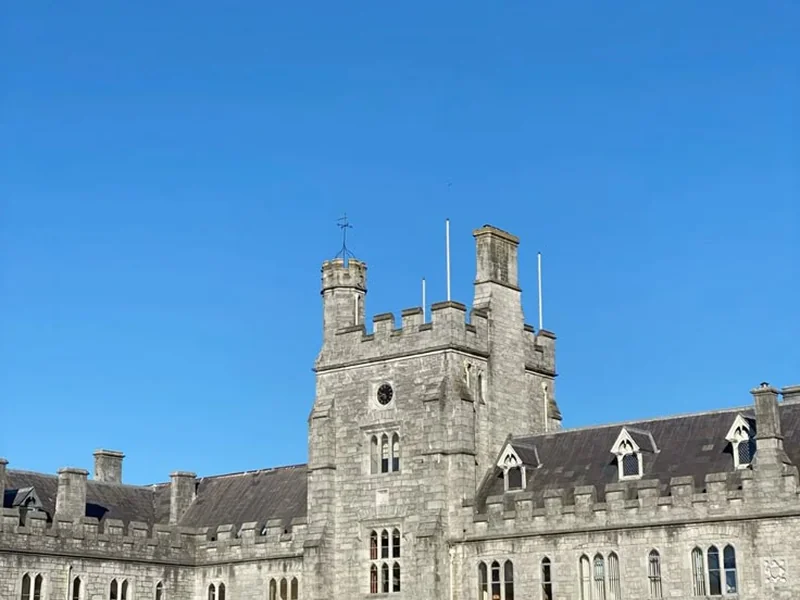
University College Cork (UCC) — sciences, engineering and health. Ireland's second city with lower living costs than Dublin.
University of Galway — strong in medicine, marine science and humanities. Known for its vibrant student culture.
University of Limerick — engineering, business and healthcare. Cooperative education model with industry placements built in.
South East Technological University — computing, data analytics and business. Most affordable study city in Ireland.
Maynooth University — social sciences, education and humanities. Close to Dublin but with a quieter campus environment.
Required Documents
Every box mapped, every form verified by our counsellors before submission.
Unconditional offer of acceptance from an Irish Higher Education Institution (HEI).
IELTS 6.0 overall for most programmes; IELTS 6.5 for postgraduate. PTE Academic 50+ accepted.
EUR 10,000 for the first year (covering living costs) plus full tuition — confirmed by 6-month bank statements.
Comprehensive medical insurance for the full duration of your stay in Ireland — arranged before application.
Tuberculosis screening from an approved clinic — required for Indian passport holders applying for Irish visas.
Cover letter explaining your study purpose, course choice, and intention to return — drafted by our counsellors.
Certified copies of all qualifications. We manage apostille and notarization if required.
Irish visa application through VFS (Mumbai). On arrival, register with GNIB for your Irish Residence Permit (IRP).
What it costs
Approximate annual costs for an Indian student. Actual figures vary by program and city.
Undergraduate from EUR 10K. Science, engineering and business Master's typically EUR 15K–25K.
Accommodation and living costs are highest in Dublin — Cork, Galway and Limerick offer better value.
Student visa fee EUR 60 + Irish Residence Permit registration EUR 300. Health insurance additional.
💡 Total first-year budget: typically EUR 25K–45K (≈ ₹22–39 lakhs). Get a personalized estimate →
Your Roadmap
Our end-to-end process can have you on an Irish campus within 4–6 months of starting.
Review your academics, English score, and budget — match you to 4–6 Irish universities or institutes. Week 1–2
Submit applications, receive unconditional offer, pay acceptance deposit to secure your place. Week 3–8
Letter of acceptance, TB screening, financials, health insurance, SOP — full visa file submitted. Week 9–12
Visa stamped. Travel briefing, accommodation, GNIB registration prep, forex — all sorted. Week 13–18
Must Read
Best Study Abroad Destinations Beyond USA, UK, Canada & Australia in 2026
Why Ireland is one of the top emerging choices for Indian students — and what else is worth considering.
FAQs
Quick answers to the questions our Ireland visa counsellors hear most from Ahmedabad students.
Ireland's Third Level Graduate Programme (also called the Graduate Stay-Back Scheme) allows international graduates to remain in Ireland after finishing their degree to seek employment. A Level 8 degree graduate gets 12 months; a Level 9 (Master's) or Level 10 (PhD) graduate gets 24 months. No job offer is needed to apply — you simply have to have graduated from a recognised Irish institution.
Ireland is the EU's only native English-speaking country. EU employers across all 27 member states recognise Irish degrees under the Bologna Process framework. Working in Ireland on the Graduate Programme visa also allows you to build experience and a salary history that helps when applying for long-term EU work permits in countries like Germany, the Netherlands, or Sweden.
Yes — your spouse and dependent children can apply to join you in Ireland as non-EEA family members. Your spouse can apply for a Stamp 3 (visitor) or, in many cases, a separate work permission if they meet eligibility criteria. Dependent children can attend primary and secondary school in Ireland. Our team handles the family visa applications alongside yours.
Yes — non-EEA students at recognised Irish institutions can work up to 20 hours per week during term time and 40 hours per week (full-time) during summer and Christmas holidays. Ireland has a high minimum wage (EUR 12.70+/hour in 2024), so part-time work is an effective way to offset living costs.
For most Irish undergraduate programmes: IELTS 6.0 overall (no band below 5.5). For postgraduate (Master's): IELTS 6.5 overall (no band below 6.0). Some business schools require IELTS 7.0. PTE Academic 50–65 is also accepted at most institutions. Our counsellors advise on the exact requirement for each programme.
After graduating: apply for the Graduate Programme visa (Stamp 1G) → secure a Critical Skills Employment Permit or General Employment Permit → after 2 years on a Critical Skills permit (or 5 years on a General permit), you can apply for a Stamp 4 long-term residency. Stamp 4 holders can work without a permit and are eligible to apply for naturalisation (Irish citizenship) after 5 years of legal residence.
Free Consultation
Tell us where you are in your journey — we'll call back within 24 hours with personalized advice.
🔒 Your details are safe with us. We never spam or share your information.