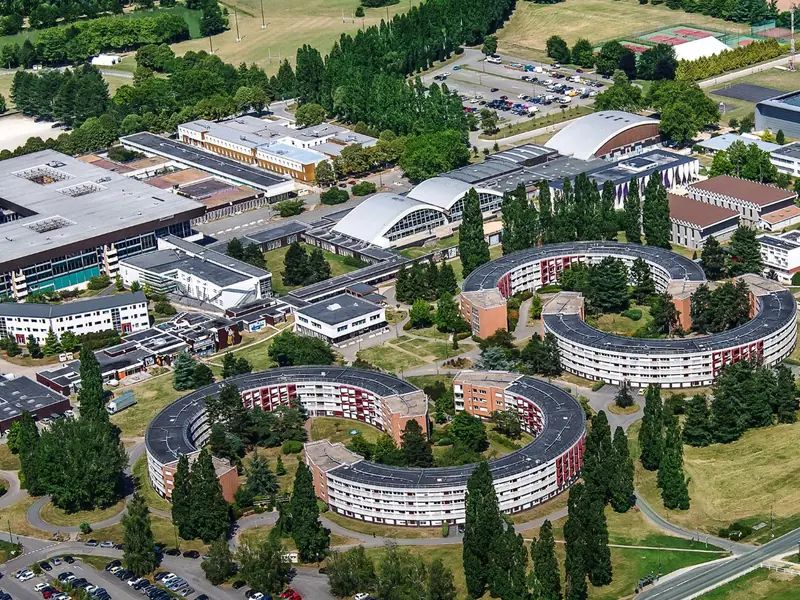
France offers world-class public universities at a fraction of Western education costs. With the 2-year APS post-study visa, Schengen travel access, and globally ranked grandes écoles, it's Europe's most underrated destination for Indian students.
Why France
France combines affordable world-class education with strong post-study work rights and unmatched European exposure.
French public universities charge as little as €2,770/year in tuition — among the lowest in the developed world for internationally ranked institutions.
The APS (Autorisation Provisoire de Séjour) allows graduates to work in France for 2 years after completing their degree — open to all nationalities.
A French student visa gives you visa-free travel across 27 Schengen countries — explore Europe during semester breaks while building your global network.
Sciences Po, HEC Paris, École Polytechnique, INSEAD — France's elite schools are ranked among the world's best for business, engineering and social sciences.
Top Cities & Universities
Six of France's most popular destinations for Indian students — each with unique academic strengths.
Sorbonne, Sciences Po, HEC Paris, École Polytechnique — France's capital and global cultural hub. Strong in business, humanities and engineering.
Université Claude Bernard Lyon 1, INSA Lyon — France's second-largest city and a hub for life sciences, biotech and engineering.
Université Toulouse III, ISAE-SUPAERO — Europe's aerospace capital. Home to Airbus headquarters and world-class aerospace engineering programmes.
Université Grenoble Alpes, Grenoble INP — renowned for technology, physics and innovation. Lower living costs than Paris with strong industry ties.
Université de Bordeaux — strong in law, social sciences and life sciences. Vibrant student city with affordable living costs.
Université de Strasbourg — on the French-German border with unique bilingual programmes. Strong in European law, international relations and chemistry.
Required Documents
Every box mapped, every form verified by our counsellors before submission.
Official admission letter from your French institution. Required to register on Campus France and initiate the visa process.
No Objection Certificate issued by Campus France India after your online registration and interview — mandatory for Indian students applying for a French student visa.
Passport valid for at least 3 months beyond your intended stay in France, with at least 2 blank pages for visa stamps.
Bank statements or sponsor letter showing a minimum of €7,380/year (€615/month) to cover living expenses during your studies.
Proof of housing in France — university residence confirmation, host family certificate, or private rental agreement for the first month.
Minimum €30,000 medical coverage valid across the Schengen area for the duration of your visa. Arranged before VFS appointment.
Motivation letter explaining your academic background, reasons for choosing France and your chosen university, and career goals after graduation.
Certified copies of all qualifications. We manage translation, apostille and notarization as required by the French embassy.
What it costs
Approximate annual costs for an Indian student. Actual figures vary by institution type and city.
Public universities from €2,770. Private grandes écoles and business schools up to €25,000.
Accommodation, food, transport. Paris is higher; Lyon, Toulouse, Bordeaux more affordable.
Long-stay student visa application fee. Campus France registration and VFS service fee are additional.
💡 Total first-year budget (public university): typically €12,000–€18,000 (≈ ₹10–15 lakhs). Get a personalized estimate →
Your Roadmap
Our end-to-end process can have you on a French campus within 3–5 months.
Review your academics, language scores, and budget — match you to the best-fit French institutions. Register on Campus France India portal. Week 1–2
Complete your Campus France online dossier, attend the Campus France interview, and receive your No Objection Certificate. Week 3–6
Compile all documents — Campus France NOC, financials, insurance, accommodation — and submit at the VFS Global centre (French Consulate). Week 7–10
Visa stamped in passport. Travel briefing, accommodation, SIM, and campus orientation — all sorted before departure. Week 11–14
Must Read
Best Study Abroad Destinations Beyond USA, UK, Canada & Australia in 2026
Why France is one of the top emerging choices for Indian students — and what else is worth considering.
FAQs
Quick answers to the questions our counsellors hear most.
Not necessarily. Many French universities and grandes écoles offer Masters programmes entirely in English — especially in engineering, business and sciences. However, knowing basic French (B1 level) is helpful for daily life. For French-taught programmes, a DELF/DALF B2 or TCF certificate is required. Our team advises on language requirements specific to each institution.
Campus France is the French government agency that manages international student applications. Indian students must: (1) create an account on the Campus France India portal, (2) enter your academic background and chosen programmes, (3) attend an interview at a Campus France centre in India (Mumbai, Delhi, Chennai, Kolkata or Pondicherry), and (4) receive your NOC. Our counsellors prepare your entire dossier and conduct mock interviews.
Yes — international students in France can work up to 964 hours per year (approximately 20 hours per week during term time, full-time during holidays). Student jobs, internships (stages) and campus employment are common. Earnings help offset living costs significantly.
The APS (Autorisation Provisoire de Séjour) is a 2-year post-study residence permit that allows graduates to remain in France and seek employment or start a business. It is open to all international graduates from a French institution with at least a Master's level degree. After the APS, you can apply for a work permit or a Talent Passport for long-term stay.
IELTS is not required by the French embassy or Campus France for the visa itself. However, individual universities require English proficiency proof for English-taught programmes — IELTS 6.0–6.5 or TOEFL 80+ is typically accepted. For French-taught programmes, a DELF/DALF B2 or TCF score is required instead.
Yes — your spouse and dependants can apply for a family reunification visa (regroupement familial) to join you in France. Spouses can apply for a work permit after arrival. You must demonstrate sufficient financial resources and adequate accommodation to support your family. Our team advises on the family visa process case by case.
Free Consultation
Tell us where you are in your journey — we'll call back within 24 hours with personalized advice.
🔒 Your details are safe with us. We never spam or share your information.